

Building Your Executive Presence
Learn how to develop the confidence, communication style, and personal brand that commands respect in the boardroom.
Read ArticleMaster frameworks for analyzing complex situations, weighing stakeholder perspectives, and making decisions that drive organizational success.

Every leader faces moments where the stakes are high and the path forward isn’t clear. You’re weighing conflicting advice. Teams are waiting for direction. The market’s shifting faster than you expected. That’s where strategic decision-making comes in.
It’s not about making perfect choices—nobody does that. It’s about developing a repeatable process that accounts for uncertainty, brings the right people into the conversation, and builds confidence in your team that decisions will hold up even when circumstances change.

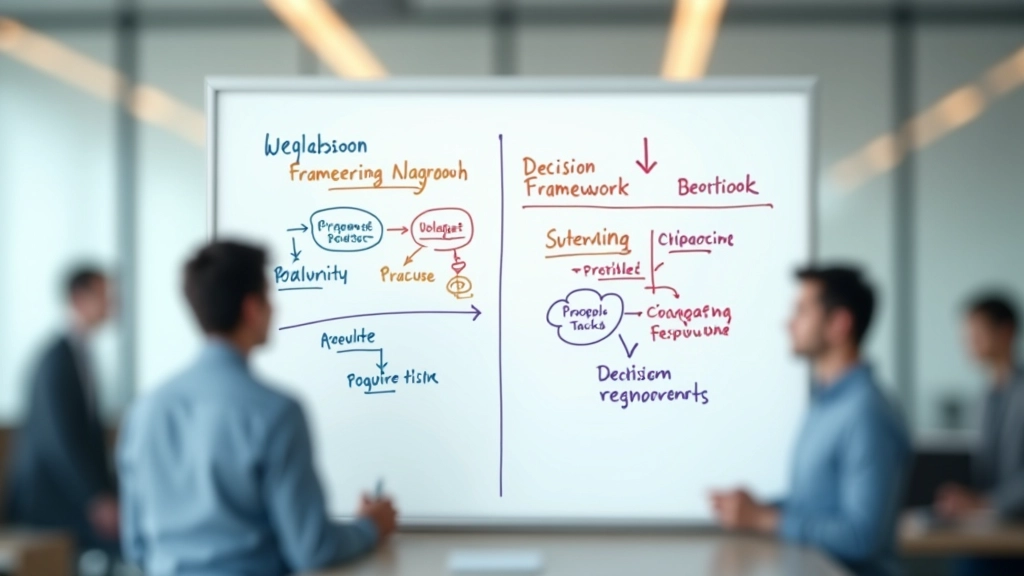
Most leaders operate on instinct, which isn’t wrong—but it’s incomplete. You need a structure. We’re talking about a four-stage framework that doesn’t slow you down but actually speeds up decisions because everyone understands the logic.
Stage one: Define the real problem. Not the symptom. Not what people are complaining about. The actual root issue. This takes discipline. You’ll be tempted to skip it and jump straight to solutions. Don’t. When Spotify was deciding whether to invest in podcast content, the real question wasn’t “do podcasts make money?” It was “how do we own a bigger part of our users’ audio time?” That reframing changed everything.
Stage two: Gather perspectives deliberately. Not everyone in the room—that creates noise. You need technical expertise, market insight, and someone who’ll challenge assumptions. Three to five people. Different viewpoints. One hour. That’s it.
Here’s what separates good leaders from great ones: they admit what they’re giving up. Every decision has costs. You’re choosing one path over another. The leaders who own this—who articulate the trade-offs clearly—build trust with their teams even when the decision isn’t popular.
Stage three is where you document the options and the costs. Option A: aggressive expansion into new markets. Requires hiring 40 people in 18 months. Increases risk if the economy slows. Option B: consolidate current position. Safer, but competitors might grab territory. Option C: selective expansion in two markets only. Balanced risk, moderate growth.
You write these down. You don’t hide the downsides. People respect that more than you’d think. They’d rather hear an honest assessment than discover six months later that you knew about a risk and didn’t mention it.
Stage four: Decide, communicate, and set checkpoints. This is where many leaders falter. They make the call but don’t explain the reasoning. Or they leave ambiguity about what success looks like. You’ve got to be clear: this is the decision, here’s why we chose it, here’s what we’re watching for, and here’s when we’ll reassess.

When you make decisions this way—methodically but not slowly—your organization starts to trust the process. They don’t all agree with every call. But they see that you’ve thought it through. You’re not changing direction on a whim. You’re accounting for complexity.
The real payoff isn’t in any single decision. It’s in velocity over time. Once your team understands your decision-making process, they can anticipate your thinking. Middle managers can make decisions faster because they understand the framework. When someone comes to you with a problem, you’re not starting from zero every time.
Most leaders underestimate how much of their effectiveness depends on this. They think it’s about being charismatic or having the best ideas. Sometimes it’s about being predictable in a good way. About making decisions people can understand and build on.
The framework works because it’s simple enough to use repeatedly, structured enough to handle complexity, and transparent enough that people see themselves in the process. That combination—clarity, rigor, and transparency—that’s what separates strategic leaders from tactical ones.
You don’t develop this skill by reading about it. You develop it by doing it. Start small. Next week, you’ve got a decision coming—maybe it’s about which vendor to work with, or how to structure a team, or whether to launch a new initiative. Run it through the four stages. Define the problem clearly. Bring in two people who’ll push back. Write down the trade-offs. Then decide and explain it to your team.
After you’ve done this five times, you’ll notice something shifts. The conversations become more efficient. You’re not second-guessing yourself as much. Your team understands your thinking faster. That’s not luck. That’s you building a repeatable muscle.
The leaders we work with who move fastest aren’t the ones with perfect information. They’re the ones with the clearest decision-making process. They’re decisive not because they’re reckless, but because they’ve removed the noise from the system.

Strategic decision-making isn’t about being brilliant or having perfect foresight. It’s about creating a process that works repeatedly, that brings the right people into conversations, and that moves your organization forward even when the future’s uncertain.
The leaders we admire aren’t the ones who never make mistakes. They’re the ones whose teams trust the process. Who understand the reasoning behind decisions. Who feel confident building on them even when conditions shift.
That’s what this framework gives you. Not perfect decisions. Better decisions. Faster decisions. And an organization that’s aligned around your thinking instead of second-guessing it.



This article is educational in nature and presents frameworks and approaches to leadership decision-making based on research and organizational best practices. While the frameworks and strategies described are informed by proven methodologies, individual organizational contexts vary significantly. The approaches outlined should be adapted to your specific situation, organizational culture, and industry dynamics. For implementation guidance tailored to your organization’s unique circumstances, consider consulting with experienced leadership development professionals.